
I’d like to see you in better conditions
Rita, a flower farmer, calls weeds “volunteers.”
At the back of an antique shop, I stood in front of a wall of old LIFE Magazines and began pulling down issues. They were sleeved in 11x17 plastic bags. A musty scent wafted up as I unzipped the bags, and after 10 minutes or so, I had a stack I couldn’t hold. I began piling them on the floor and eventually sat down, surrounded by euphoric women selling mattresses, hot water heaters, kits for white-wall tires, watches, window glass, ironing board covers.
Arms full in the check-out line, the man behind me asked, “What are you going to do with all of those?” I told him I was going to make art. The ads made me anxious; the women looked trapped inside the stories. This, LIFE said, is what women are interested in. This is how it is. (For
white women, that is. The only women of color I found in LIFE’s ads were in news stories about civil rights or poverty.)
Had I grown up in an earlier decade, LIFE would have been for me. The women in its ads felt like older versions of myself, brightly busy pretending to be happy inside narratives that weren’t their own. In the 1960s, benzodiazepines like Valium entered the cultural story. The Rolling Stones dubbed them “Mommy’s Little Helper.” They were here to help dull the quiet panic of domestic life. As if the way we cope is the problem, not the conditions or the stories that encode them.
The worst story I’ve ever believed about myself is that my worth had to be earned. That I had to perform a job to be loved, even if I hated it. If I wasn’t “good enough,” it meant I had to fix myself. I couldn’t have needs unless I’d first provided value. Work always came first, then reading, writing, art…if there was time. And since I owned a company, it felt like I had created these rules.
But I was adhering to them long before I was a CEO. In high school, they found me through music. I studied with the first flutist in the Hartford Symphony, played in a university quartet, and planned to support myself that way. By being exceptional, I earned the moments when I lost myself, swaying to my notes as I sat on the flowered quilt in my bedroom. But in college, when I had to choose a practical major, music shrank from a calling to a hobby. Eventually, I set it down and always blamed myself for quitting.
Outside the slider doors, our dahlias are in their new home along the side of our greenhouse. Yesterday, they looked a bit yellow, so I gave them some water, and a few hours later, they were reaching toward the sky. Next to me are mason jars of sunflowers and zinnias that tucked in tighter last night after dark and are now opening to the light. When I went through mindfulness teacher training, one of the instructors said that you can’t yell a flower into bloom. It needs care, sunlight, patience. The right conditions.
Meditation helped me see my conditions. Over time, as I watched my mind at work, I saw the same story of earning worthiness popping up in new contexts. Even in the quiet of our land in Vermont, where I’ve been joyfully consumed making collages, at night I hear the old tape rolling in: “What are you going to do with all of this?” As if creating isn’t enough. As if it needs a reason.
What is the purpose of a flower? I let this question float.
For years I kept a list of the things I’d believed about myself, and during the week I spent making collages of women from 1950s and ‘60s LIFE Magazine ads, I went looking for it again, glancing at it as I worked. As I cut each woman free from her ridiculous conditions, I kept asking, “What can I give her? What does she need?” And as I discovered her new conditions, very often in those same pages, I felt my own boundaries expanding. It felt easier to breathe.
What is the purpose of living a life?
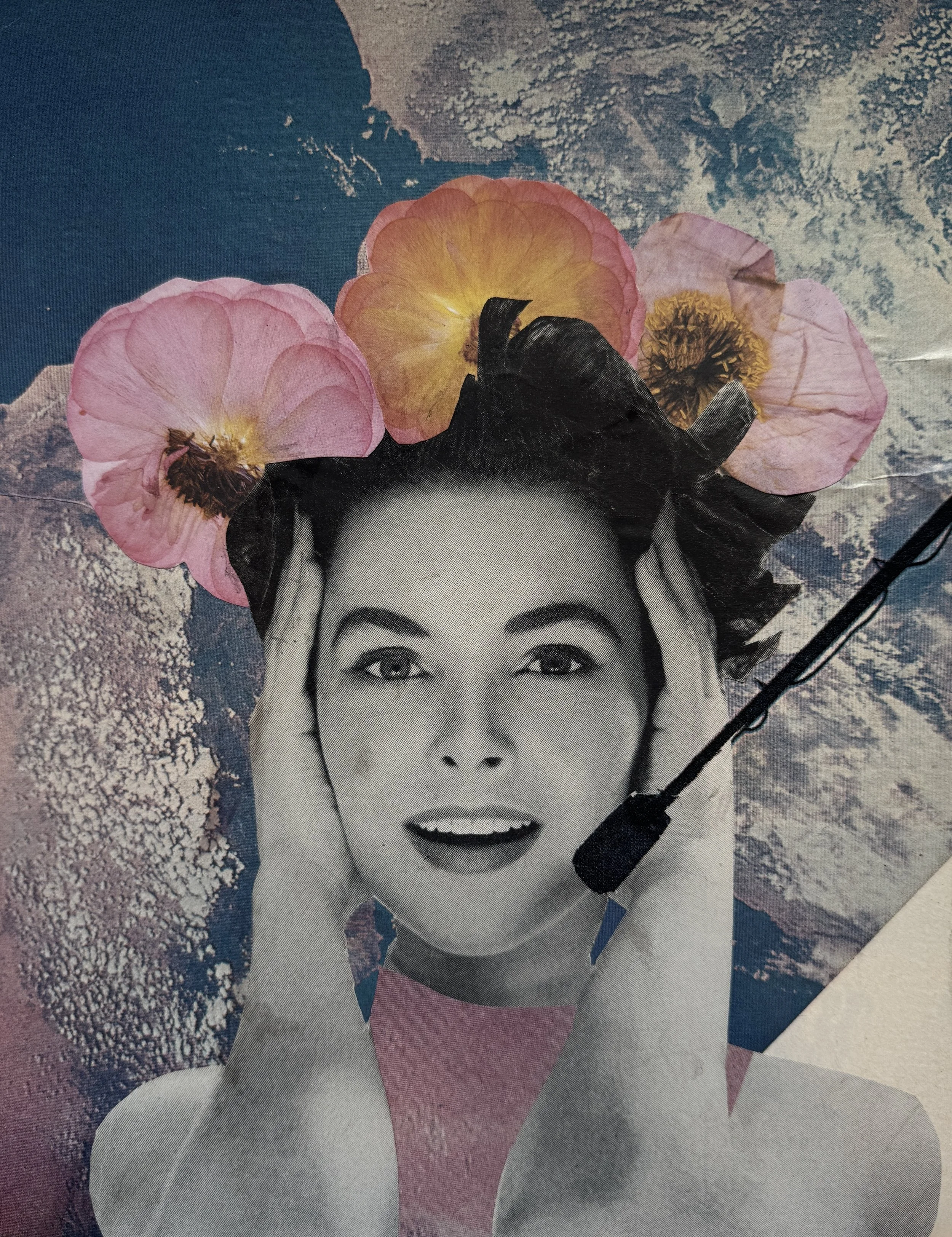
“We’re listening,” my hand-cut collage.
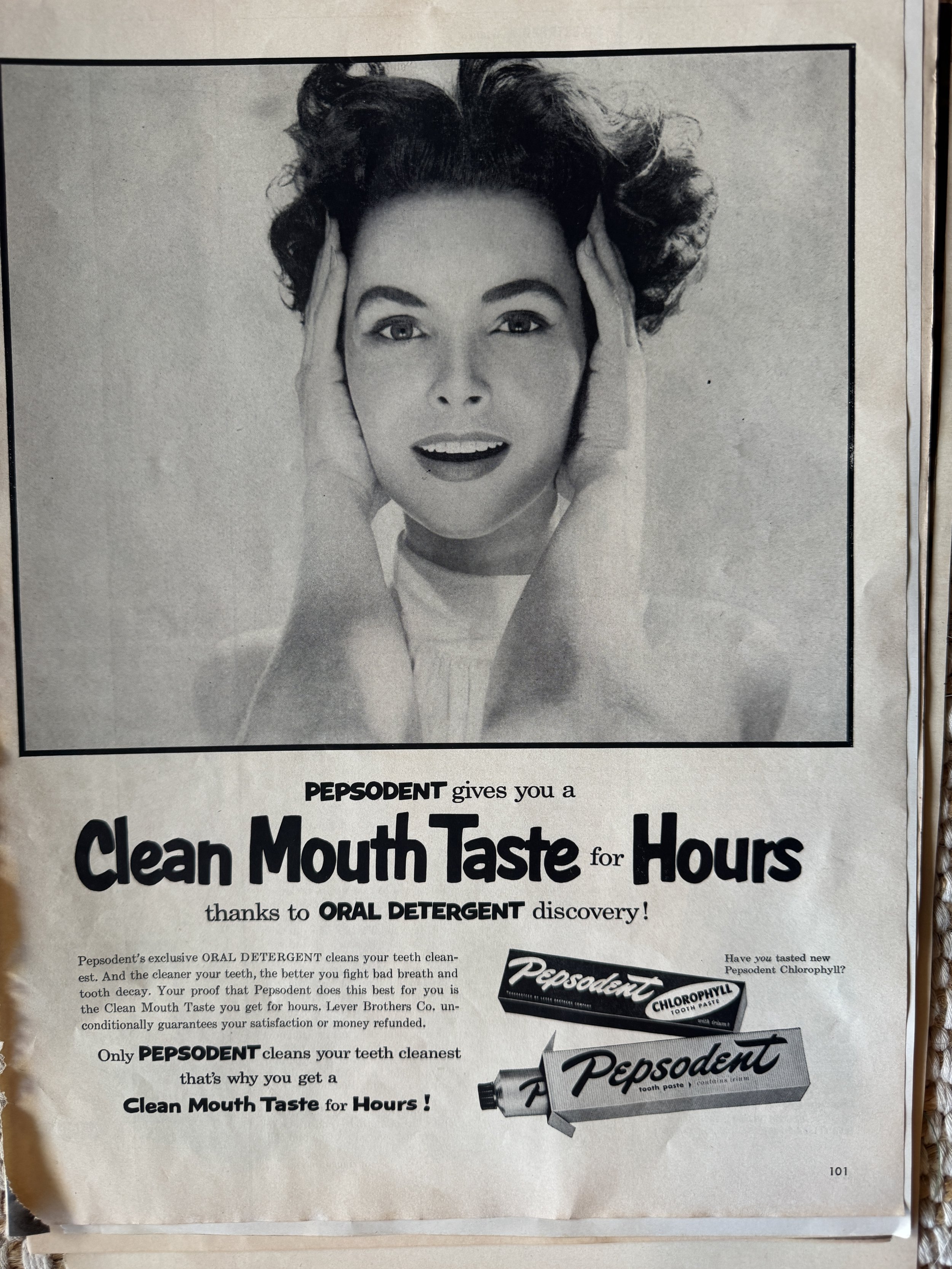
1950s Pepsodent Toothpaste advertisement.
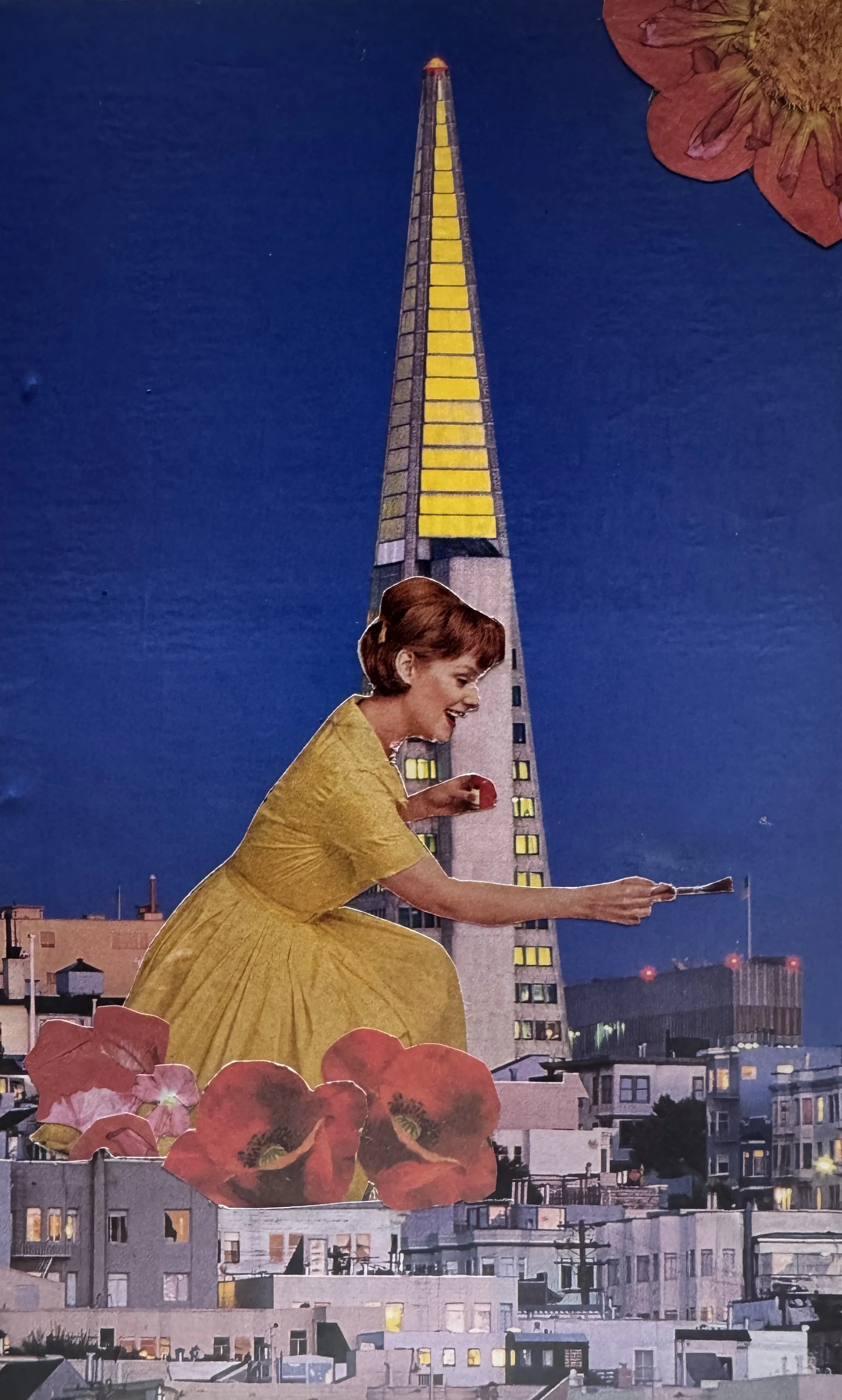
“Perspective,” my hand-cut collage.
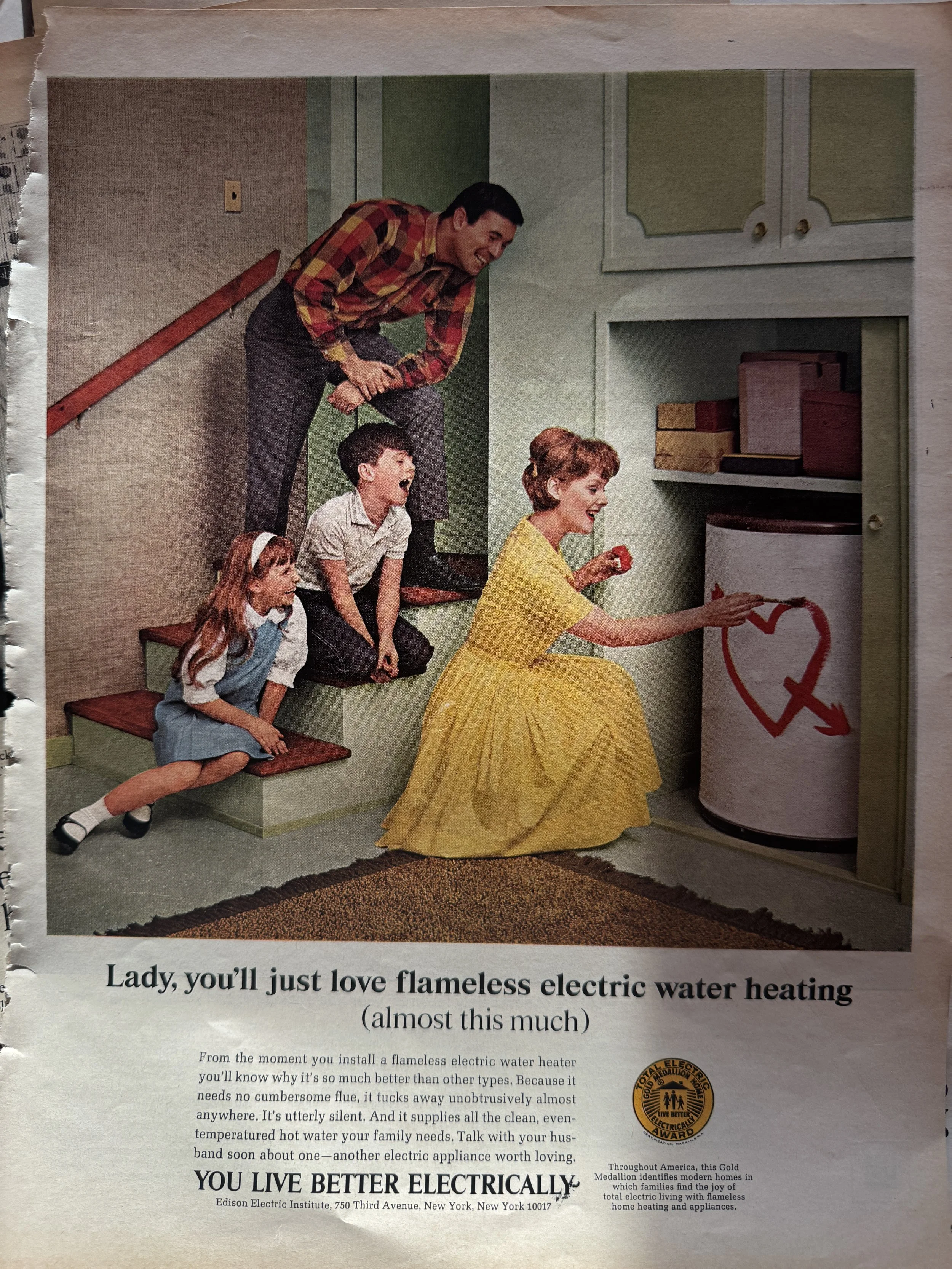
1966 Edison Electric Institute ("Live Better Electrically" campaign).
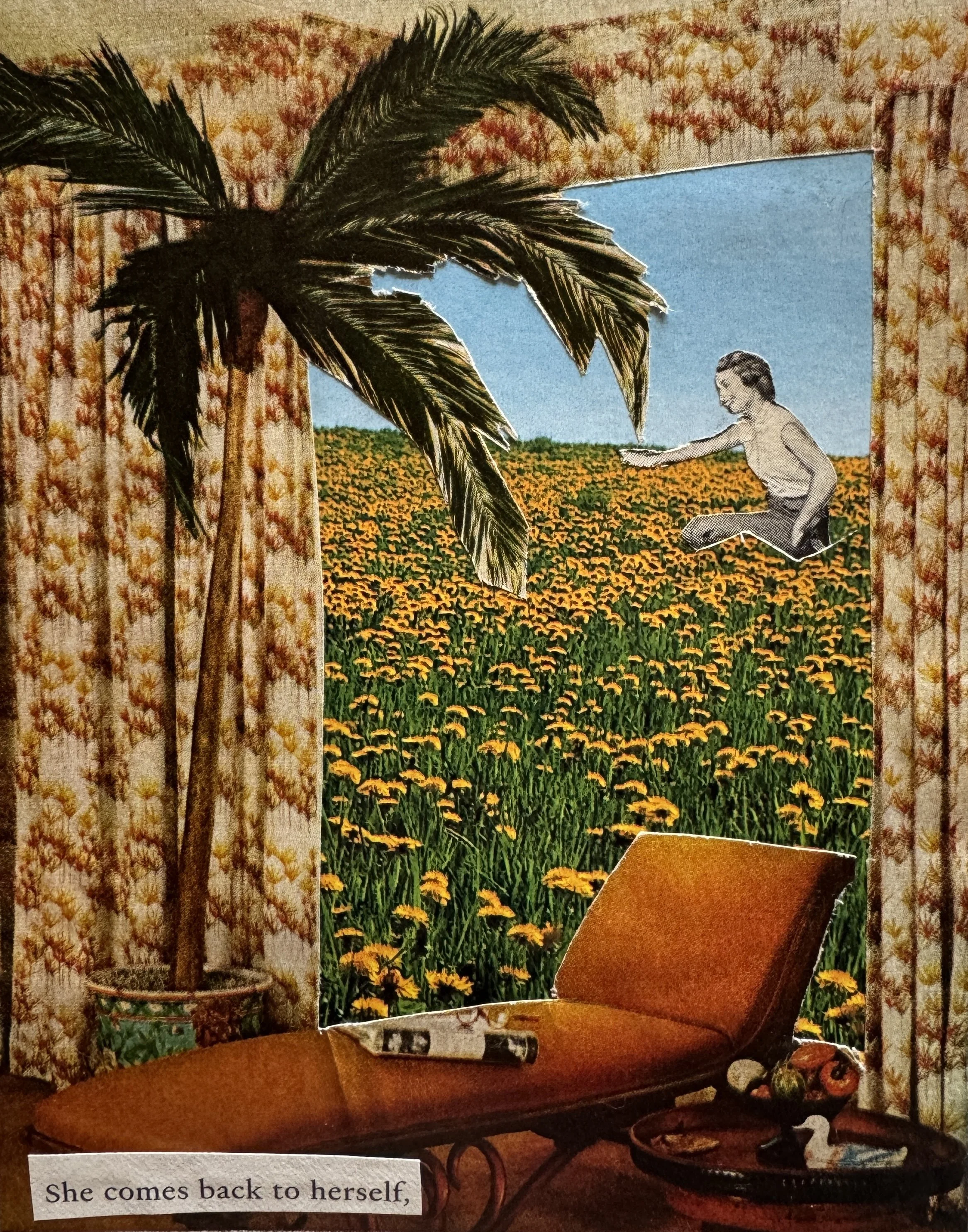
“Relocating,” my hand-cut collage. Found text: "She comes back to herself." - Rosalind Brown, "A Narrow Room," The Paris Review, Fall 2023
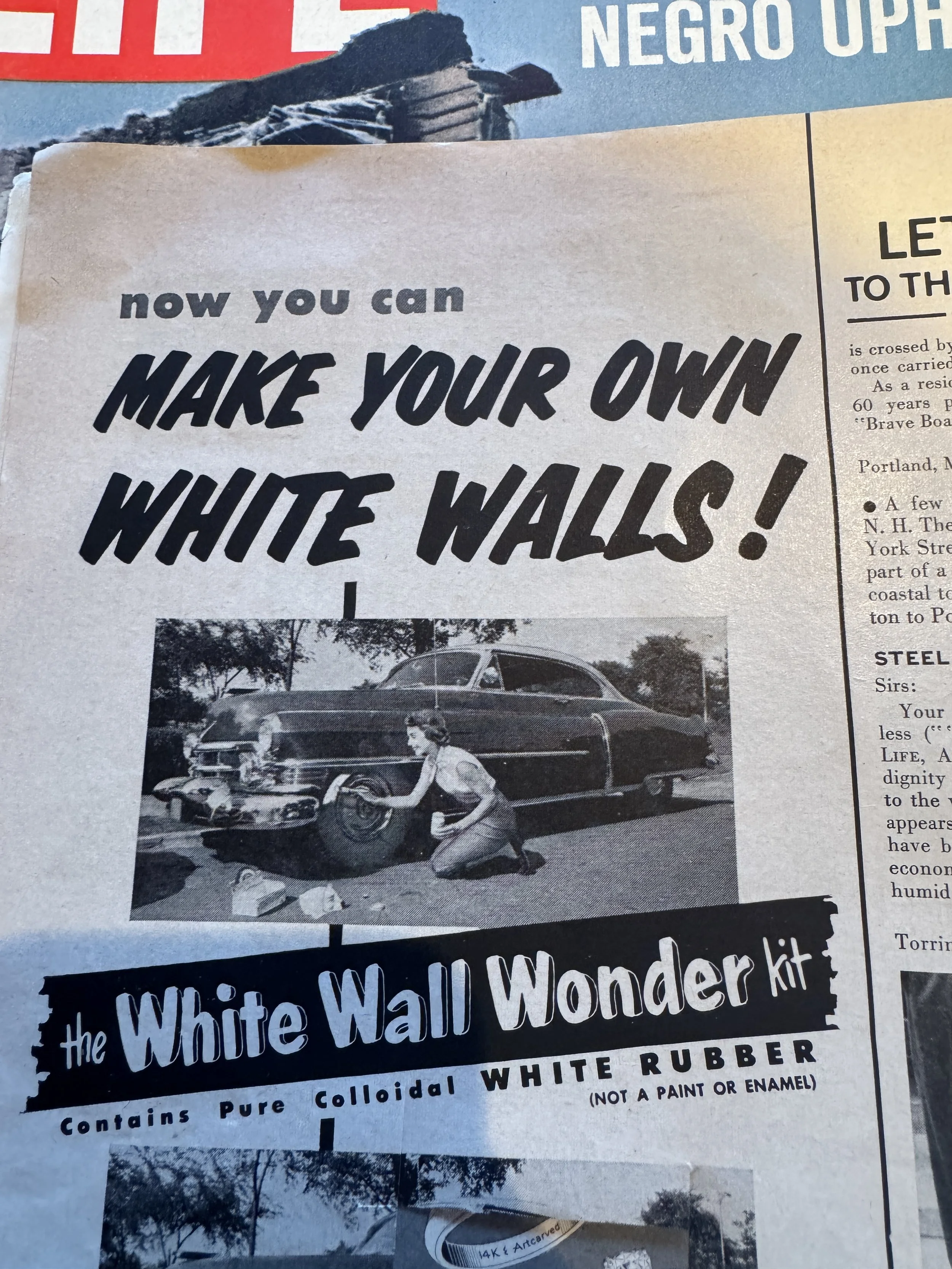
Mid-1950s White Wall Wonder Kid advertisement.
** You can find my full collage gallery here.